
Convention and visitors bureaus (CVBs) and destination marketing organizations (DMOs)—designations that largely mean the same thing, and which term is used depends on the organization’s preference—market host cities, regions, and states, with, among other things, the aim to attract meetings and events. For meeting and event planners, CVBs/DMOs provide numerous services, including requests for proposals, venue sourcing, and supplying regional travel information. Meeting and event planners also know how instrumental CVBs/DMOs are when it comes to finding hotels; organizing off-site excursions; booking team-building activities; and contracting vendors for meeting essentials, including catering, decor, audiovisual services, and attendee transportation.
What many don’t realize is just how significant a role CVBs/DMOs often play behind the scenes when it comes to destination development: supporting initiatives and projects designed to enhance opportunities for visiting groups while strengthening infrastructure and facilities that also improve quality of life for residents. Bill Geist, owner and founder of DMOproz based in Madison, Wisconsin, and a longtime consultant to CVBs/DMOs, highlights the Destination International’s 2025 DestinationNEXT Futures Study. The study identifies strategies and forces shaping the future of tourism organizations, and indicated that 84% of the world’s CVBs and DMOs actively engage in destination development. “Those [who don’t] risk falling behind,” Geist says.
Here in Michigan, CVBs/DMOs are far from falling behind. They continuously lead efforts that range from creating new events and building additional recreational facilities to spearheading construction and expansion of sports venues to attract groups—and revenue. (To simplify, this article uses only the CVB acronym.)
Money Matters
Paul Beachnau, executive director of the Gaylord Area Convention and Tourism Bureau, says that for the longest time, his organization’s budget was 100% devoted to marketing and advertising to attract leisure and group visitors. After hiring Geist to help develop a strategic plan about eight years ago, that changed. “One of the things Geist presented to the board was that we had an opportunity with part of our budget to invest more in the community,” Beachnau says. “He shared that if [Gaylord is] a vibrant, healthy community people want to live in, it is going to be a community people also want to visit. That kind of turned things around for us.”
Now, the organization budgets for community development projects, contributing $250,000 in the past eight years for initiatives that include a new viewing platform for the city-maintained elk herd that is a popular attraction for many, the installation of themed directional signs around the city for wayfinding, the addition of tennis courts, a downtown streetscape project, a park at the trailhead of the North Central State Trail downtown, and the construction of the Pigeon River Country Discovery Center in the nearby 115,000-acre Pigeon River Country State Forest.
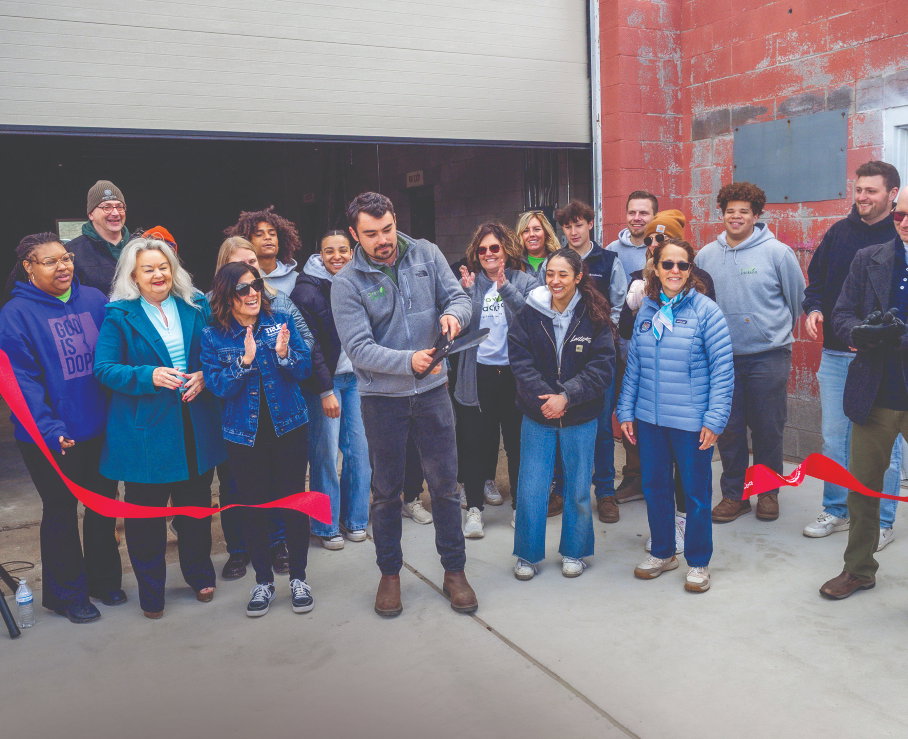
Meet Mt. Pleasant also devotes one budget line item to community improvements, investing $515,000 in projects in the city and surrounding Isabella County since 2019, says the CVB’s President and CEO Chris Rowley. There are two focus areas: sports-related and general—both dedicated to enhancing quality of life for residents while benefiting visiting groups. Some recent projects Meet Mt. Pleasant supported include trail improvements and maps at a county-managed park; public restrooms downtown; the Pere Marquette Rail Trail Beautification Project; contributing to the building of the new Morey Event Center at Mid Michigan College’s Mt. Pleasant campus, slated for completion this fall and to offer additional meeting space; and multiple others over the years.
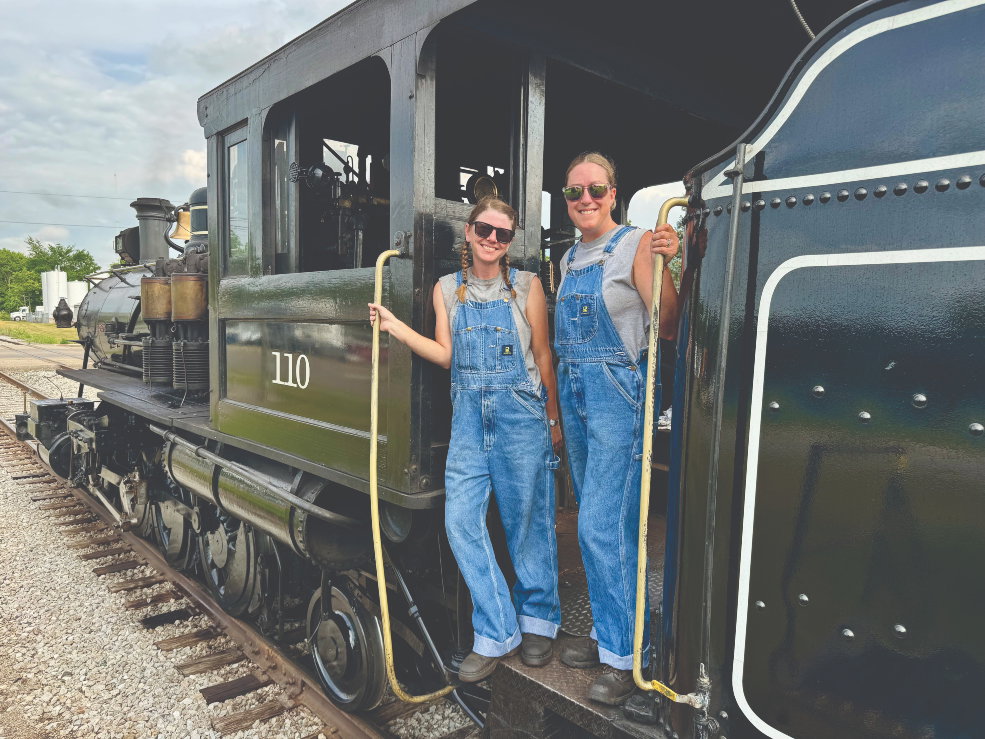
The recently retired longtime executive director of the Coldwater Country Conference & Visitors Bureau, Debra Prater, says budgeting for community projects is a priority in her town, too. “Now that we have increased our budget, we do more hands-on things,” Prater says. The organization worked closely with area economic development officials on a program that evaluates impressions first-time visitors get when they come to town and how those can be enhanced. The CVB also partnered with the Little River Railroad steam train to improve accessibility. In addition, it has helped the Tibbits Opera House in Coldwater with marketing and equipment procurement through a combination of volunteering and cash support, she says.
Proactive Advocates
Experience Jackson’s Vice President of Marketing and Communications Rachel Buchanan confirms, “A lot of people think our only goals are to get people into town and have them stay at a hotel, visit area attractions, and eat at restaurants. But those things are definitely not everything that goes on behind the scenes.”
For the past few years, Experience Jackson has been laser-focused on proactively advocating for Jackson County. The CVB was heavily involved in drafting the Jackson County Chamber of Commerce-initiated 20-year vision plan called “Drive Jackson.” That spurred several projects, including development of a farm stop as part of the River & Rail Food Hub, a multiphase regional grocery and farmers market development inside the renovated armory building at the 1839 Michigan State Prison. “[The food hub] is right where multiple paths cross for encouraging recreation and biking, and it is becoming that meeting space and event center,” Buchanan says. “It is bringing new life into something that has otherwise been part of Jackson’s history.”
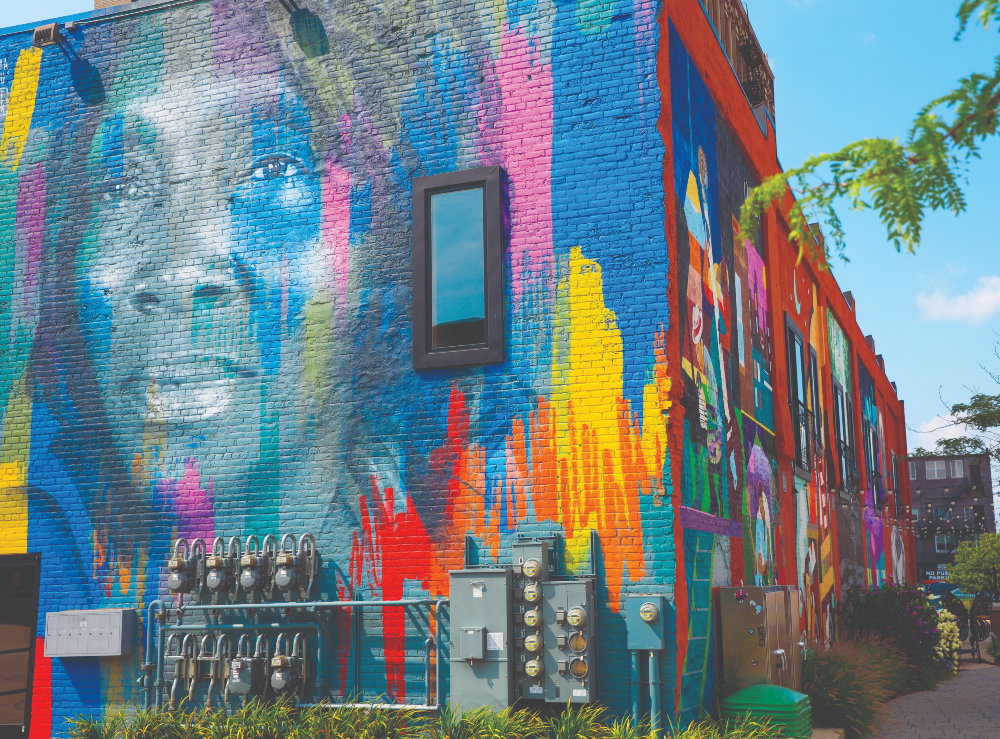
Experience Jackson also recently partnered with the chamber of commerce for “Build in Jackson,” a talent attraction effort tied to the city’s “100 Homes Program,” designed to fill vacant city lots with newly built houses. “We are helping to do kind of a young professionals talent and attraction program,” Buchanan says. “It plays directly into taking our community and elevating that—getting people interested in wanting to live here.”
Special Events
Many CVBs initiate or attract events that bring in groups and ultimately contribute to area infrastructure. Explore Monroe’s staff was involved in creating and attracting events specifically because of the projected economic impact of gatherings. For example, the organization was one of the main drivers and hosts of the first Michigan Craft Distillers Festival. Monroe also attracted its first Mercury B.A.S.S. Nation Open Series qualifier fishing tournament in 2025. In early 2026, it hosted the first stop of the 2026 Bass Pro Shops and Cabela’s National Walleye Tour, which many outdoor television channels covered. A dedicated budget item has been established to attract larger-scale events that highlight the destination, increase visitation, and introduce Monroe County to new audiences from across the country.
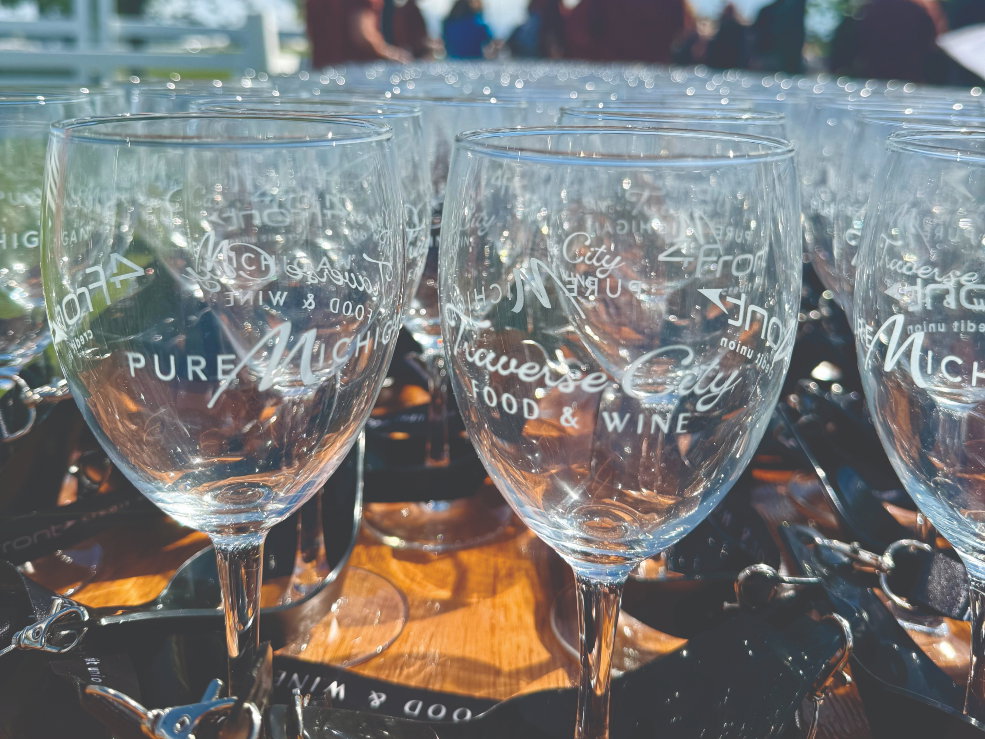
Traverse City Tourism launched its inaugural Traverse City Food & Wine in 2025. The five-day extravaganza showcased the region’s food and beverage industry and featured demonstrations, classes, and celebrities participating in more than 80 events—many of which sold out. The organization capitalized on its success by rolling out Forest to Fork, focused on springtime foods and pairings, in May 2026 as a prelude to the second annual Food & Wine in August.
“We have a component of our work called destination development,” says Whitney Waara, chief operating officer of Traverse City Tourism. “A lot of CVBs contribute toward a convention center. We do not have that here.”
Instead, Traverse City Tourism supports assets such as trail networks, and, most recently, it contributed $1.5 million toward the building of a field house for Traverse City Area Public Schools. It also subsidizes a portion of childcare expenses in a state program for employees of its lodging partners. “We have a role as an economic development organization in the community, and we look at various drivers,” Waara says. “[Any project we take on has] to be something that aligns really well with the need of the destination and the community itself.”
Harriet Carter, senior vice president of services, partnerships, and events for Visit Detroit, says there’s no question that events like the NFL Draft that Detroit hosted in 2024 have a major long-term impact on destinations, in addition to visitor spending at the time. “We broke records,” she says. “The economic impact [of the draft] was $213 million.”
Visit Detroit played a huge role in attracting the NFL Draft by pitching Detroit as the host city and in leading the host committee. Along the way, the CVB leaned into involving area small and minority-owned businesses “to give them the opportunity to be part of the hospitality ecosystem,” Carter says. Other major sports events on Detroit’s horizons include the NCAA Men’s Final Four in March 2027 and the NCAA Men’s Midwest Regional (Sweet 16 and Elite Eight), set for March 2028.
Visit Detroit also has been a staunch advocate of—and cheerleader for—the new JW Marriott Detroit Water Square, which is under construction and will be connected to Huntington Place. The long-awaited, significant hotel development for Detroit’s convention scene is slated for a February 2027 grand opening.
Sports Tourism
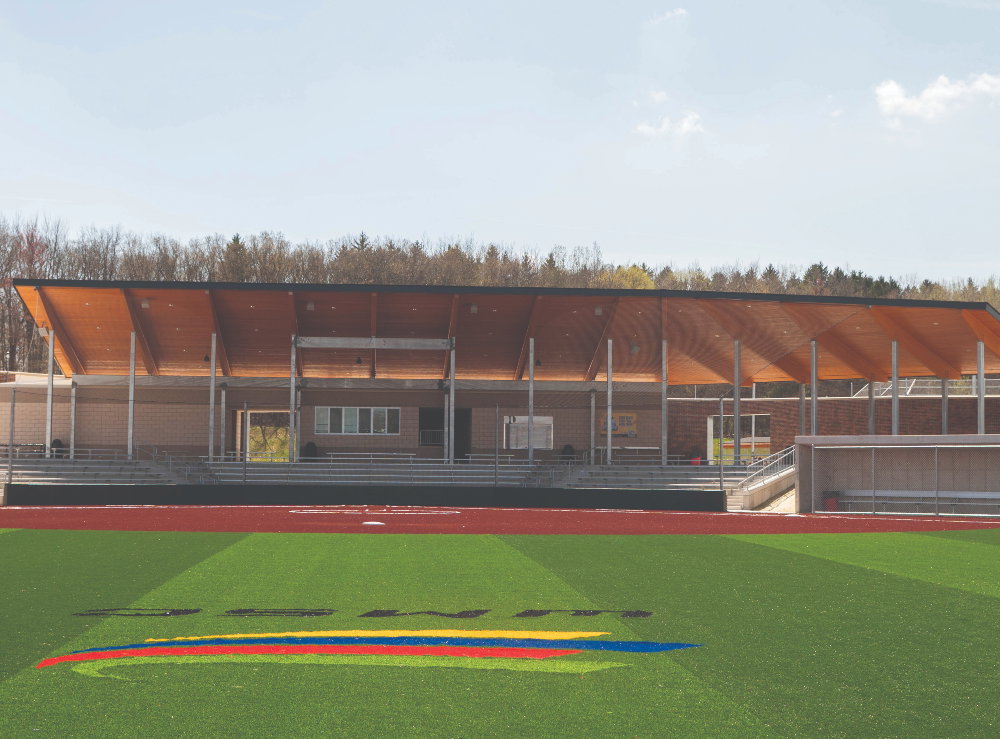
The Grand Rapids-based West Michigan Sports Commission (WSMC) recently presided over a $13.5 million expansion of the Meijer Sports Complex in nearby Rockford. The commission reported generating $83.5 million in estimated economic impact in 2025 through 105 hosted events. WSMC President Mike Guswiler says the key to that kind of success is having facilities that meet the needs of large sports events. And residents also benefit from the infrastructure that comes with it.
Guswiler says communities across the country go after participatory sports tourism because it is a $60 billion industry nationwide. “Many are small communities that do not have a convention center,” Guswiler says. “So, they are investing in facilities like sports complexes to get a piece of that $60 billion industry. They also see that sports tourism pairs well with giving residents a community asset to use.”
That is what’s happening in Frankenmuth, where the $35 million Frankenmuth Credit Union Sports Complex, intended to expand the region’s sports tourism business, is under construction. Frankenmuth Chamber of Commerce and Convention & Visitors Bureau President and CEO Jamie Furbush notes the CVB led the effort working with city and state officials to build the approximately 100,000-square-foot facility. It will have flexible space to accommodate basketball, volleyball, and pickleball, as well as large group events. “Because of the court surface, we won’t do heavy equipment shows, but we could do other events, and there are a number of flex rooms for private breakout sessions,” Furbush says. Completion is slated for the end of 2027, with bookings now accepted for 2028.
Get Connected
Coldwater Country Conference & Visitors Bureau
coldwatercountry.com / 517-278-0241
Experience Grand Rapids
experiencegr.com / 877-VISIT-GR
Experience Jackson
experiencejackson.com / 517-764-4440
Explore Monroe
exploremonroemi.com / 734-457-1030
Frankenmuth Chamber of Commerce and Convention & Visitors Bureau
frankenmuth.org / 800-FUN-TOWN
Gaylord Area Convention and Tourism Bureau
gaylordmichigan.net / 989-732-4000
Meet Mt. Pleasant
meetmtp.com / 888-772-2007
Traverse City Tourism
traversecity.com / 800-872-8377
Visit Detroit
visitdetroit.com / 800-DETROIT